Showing posts with label culture. Show all posts

Tuesday, February 22, 2011

"Even the Longest Journey Must Begin Where You Stand"


The quote is from Lau Tzu, the Chinese philosopher-turned-management-guru -- and I like it for a couple of reasons. First, it’s so true: you have to honestly appraise your current situation in order to reach any goal. Secondly, no matter how bold your strategy, you can’t obfuscate the situation, thinking that strategy only needs to be stated to be accomplished. As any successful person will tell you, there’s a lot of sweat equity that has to be paid between where you stand and the journey you take.

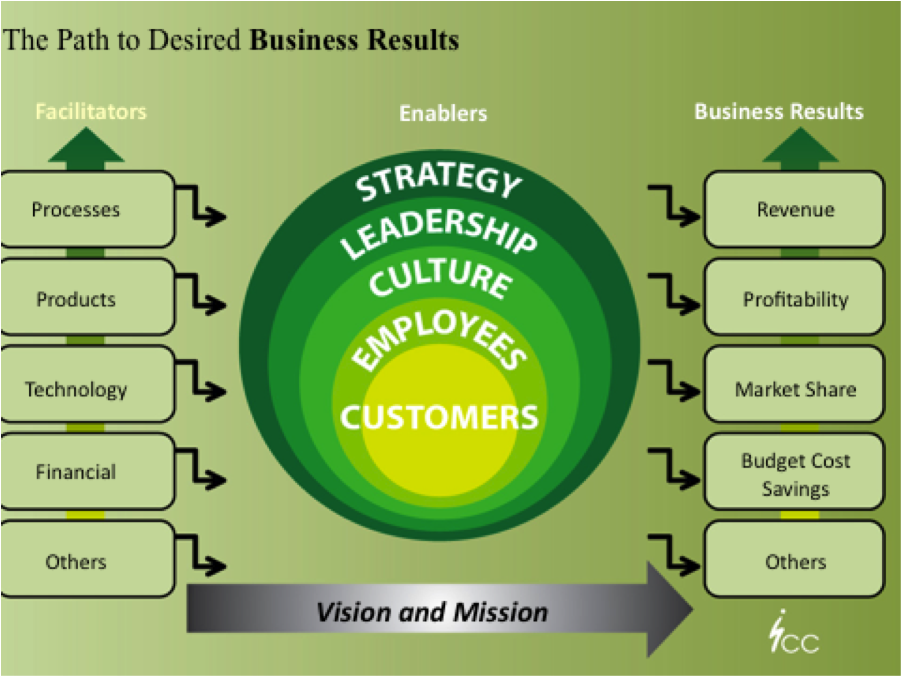
As you probably know by now, I’m fascinated by data and passionate about analytics and how both will transform our businesses. However, it’s a journey not a sprint and begins with assessing what we call "the path to desired business results":


There are five key drivers of performance in any organization and while analytics might be the means to an end, these enablers are the catalysts. So, standing where you are now, it’s worthwhile asking the following questions:

Strategy: How will analytics help us compete successfully? Will we be able to differentiate ourselves in our markets using analytics?

Leadership: Are we as leaders prepared to commit the organization to an analytics based way of making decisions? Can we give the employees who will have to make this work the buy-in they need to be successful? Can we put aside our impatience and allow them to Think Big but Start Small?

Culture: Do we have data fiefdoms that refuse to share data or collaborate on projects? Do we celebrate the efforts of the early adopters, even if success isn’t guaranteed every time, in the spirit of discovery and experimentation? Analytics is all about experiments, testing, and doing it over and over. Have we made more of our decisions by the seat of the pants and been proud of it?

Employees: Do we want analytics to cascade down into the organization and, if so, are we prepared to properly train those whose jobs it will be to manage the technology that supports their business knowledge? Are we hiring employees for competencies that underpin the need for a broadly based analytics movement?

Customers: This is one area of most businesses that has received the most analytics attention so the questions here are: is our customer data in one place, is it at the lowest level of analysis possible and have we aggregated it across all of our channels?

The analytics journey is probably never ending as technology and competencies improve exponentially to deliver more insight with less complexity. But, knowing where you stand before you take the first step – or flying leap – will ensure that this critical initiative doesn’t crash and burn at the first turn in the road.

What is your analytics journey like? Are you looking first at where you stand or sprinting off for the unknown?

Wednesday, January 19, 2011

Interest or Commitment: Knowing the Difference Could Change the Way You Manage


One of my clients recently sent me this quote from Peter Drucker that has had me reflecting on its true message and how it is applied, especially in business:

“There is a difference between interest and commitment. When you are interested in doing something, you do it only when circumstances permit. When you’re committed to something, you accept no excuses, only results.”

For me, being interested implies a passive mindset whereas commitment seems active, which is confirmed by dictionary definitions: “the trait of sincere and steadfast fixity of purpose”. While interest is associated with curiosity about someone or something, commitment is the “act of binding yourself (intellectually or emotionally) to a course of action.” Interest is more cerebral perhaps while commitment is both cerebral and visceral. Isn’t commitment what we want and need in our organizations to be successful? When leaders talk about connecting to the ‘heart and the mind’ aren’t they referring to commitment?

I have a few thoughts on how to listen for and instill commitment day-to-day in our businesses:

Strategy: is business strategy a story that inspires people to bind themselves to the direction in which you want to go?

Leadership: before employees are committed, leaders have to demonstrate their steadfast fixity of purpose. It’s a trait not a slogan (“We are committed to our employees.” “We are committed to our customers.”)

Culture: is the business environment a community that binds people together to achieve a common purpose or a federation of possibly interesting activities?

Employees: is the hiring process geared more toward uncovering interests than discovering commitment?

Customers: do we expect commitment from our customers while only being interested in what they can do for us?

The late Peter Drucker’s ideas and writing continue to provide enduring lessons of what motivates people and moves organizations toward a higher level of performance. As I said to my client as we exchanged emails, Drucker was a no nonsense thinker who understood the duality of our 'heart and mind' selves.

Does anyone have a favorite Drucker thought?


Wednesday, December 29, 2010

Why We Love Predictions So Much & 3 of Mine


Have you had enough of the look-backs at 2010 and the predictions for 2011? Apparently, most people haven’t, which is just as well, judging by the number of blogs and articles hitting my RSS feeds, Google Alerts and email box. Why do we love predictions so much?

Humans are unique in the animal world in that we can detect and make meaning from complex patterns all around us that result in decisions about how we should behave, think, live our lives and so on. Predictions – our own and others’ – are aggregates of these patterns so we find them confirming or interesting or sometimes just weird but we pay attention to them.

We have a strong need to exercise individual control, some of which is cultural and some of which is human. Getting a handle on the possibilities for the future, gives us a sense of mastery, self-esteem and even optimism. We tuck these predictions away in our memory banks and they become part of our pattern recognition process.

According to Dr. Shelley E. Taylor, a professor of Health Psychology at UCLA, “positive illusions” about the future are mentally and physically healthy; they improve the ability to care for and about other people and they increase the capacity for creative and productive work.

As predictions seem to be so important to our general well being, I’ll offer three of mine for the business environment:

  • CEO’s will be more open to experimentation at work BUT these experiments will be verified by analytics. Managing risk is still hugely important in this fragile economy. Trust but verify.
  • Social capital will become a key hiring criteria for positions that influence business performance. The quality of a person’s relationships will become as important as her experience and skill set.
  • Customers will be more quixotic than ever and companies will make even larger technology investments to try to predict their moods, behaviors and buying intentions. Whether these investments pay off will depend upon:
  • Business Strategy
  • Organizational Culture
  • Quality of Leadership
  • Employee Fit
  • The Right Data, Metrics and Analytics

As a recent blog from IBM stated, there is no ROI from Business Intelligence unless someone uses it to make decisions.

Happy New Year and let’s get 2011 started!!

What are some of your predictions for 2011?


Wednesday, June 16, 2010

Let's Hear It For (the New) HR


A lot of us have taken a verbal swipe at the HR profession occasionally; some have written about it. After all, they are the “people people” not the hard-driving, analytical, results-oriented business influencers that the rest of us are. Right?

I had an amazing experience a couple of weeks ago when I volunteered for SHRM-Atlanta at a call in Help Desk for job seekers hosted by a local TV station. Here are some of the things I observed about my HR colleagues:


They Get It. They not only have a good grasp of business strategy but also are good at formulating it. The organizers developed a mission critical style and approach to this event that was awesome to watch. During our two- day call-in, the organizers were tracking call types and other metrics to analyze how best to follow up and improve for the next call in. I know they also will be tracking and analyzing call resolution.

They Are Savvy About Business. This group of HR professionals developed a program, including training, researched resources, screened volunteers and marketed the heck out of this event using every channel available including social media; on time and with a shoestring budget.

They Give Back. SHRM-Atlanta has a vision of Working For a Better Atlanta and from the Board down to individual members; they are trying to live out that vision in all that they do. I don’t think this approach is limited to our local people.

They Believe in Education and Development. HR professionals are credentialed and take their own professional development very seriously. I never sat for the PHR or SPHR designation but I understand that the curriculum is rigorous and maintaining the credentials requires annual continuing education including strategic coursework. How many of us can say that about our own professional development?

They Are Collaborative. These HR professionals worked closely with the Department of Labor and the television station as a seamless team; adding their own particular talents to create something bigger and better than anything they could create alone.

They Can Execute the Heck Out of an Initiative. That says it all.

Is there a theme here? I believe it’s that HR isn’t “Personnel” any longer or the group that processes benefits and payroll or nags us about performance reviews. There has been a sea change and it can only benefit businesses that are challenged to do more with less and yet do it with the best talent available. Your HR department just might be an untapped source of what it takes to lead an engaged company:

  1. Strategy Development and Execution
  2. Identifying and Developing Leaders
  3. Creating a Culture of Collaboration and Teamwork
  4. Providing guidance and influence in human capital development and management
  5. Selecting, developing and training customer-focused employees through a performance management system.


So, before we put our HR colleagues back in their box on the organization chart, take another look at your HR department. Talk to them; invite a dialogue. Better yet, invite them to your next strategy session. You wouldn’t dream of leaving out the Finance person, would you?

Is your HR Department leading the way to organizational engagement? What are some of the ways you utilize its strengths in non-traditional ways?


Monday, June 7, 2010

What Business Are You In? Really.


I’ve got a whole key ring full of bar-coded plastic tags that designate my “loyalty” to a particular store; I’ll bet you’ve got fistfuls as well. Are they an indication of my loyalty? Can you measure my loyalty with that piece of plastic?

Companies like Southwest Airlines and Zappos know they are in the customer service business; they just happen to fly airplanes and sell shoes. We all are in the business of serving our customers and that is a tall order when, for years, we organized our businesses around products.

I don’t know about you, but I have a list of criteria that my brain churns through in the midst of a buying decision. If someone wants my business, they have to demonstrate that they know me, respect my needs and provide an experience that suits me.

If you say you’re customer focused, show me. Nothing wears me out faster than marketing messages that bear no relation to the actual experience. Who thinks of this stuff?

Have you ever listened to your own voice mail or help desk systems? Finding the balance between efficiencies and customer experience is a challenge but there is no excuse for making it so hard to talk to a human that we have to Google to find out how to do it. What’s more important than a customer anyway?

Your web site may be great but your (fill in the blank) department lets you down. There are so many ways I can touch your company and if all the touchpoints aren’t designed for my buying experience, I may be leaving and you won’t even know it.

Why can’t the person I’m talking to make it right when there is a problem? As Mick Jagger said, “I try and I try and I try but I can’t get no satisfaction.” Why is there more chain of command in Customer Service than the Pentagon? If your customer strategy spells out how you’re going to deliver a customer experience and the culture supports it, employees should have the tools and skills to make the decisions.

Why are your marketing “campaigns”, coupons and emails so generic? Is it that you don’t really know me, or that you don’t care? You collect so much information from me with that plastic tag and yet you don’t connect the dots.


Please do not expect me to complete a survey foisted on me by an employee who is asking me to give him top marks. This is no way to reward employees or to gather valid customer data.

Loyalty programs are part of customer relationship management but they don’t guarantee that you have hearts and minds. I don’t think loyalty is bought; it’s earned over time by designing the experience customers tell you they want and ensuring the company is aligned around it. What are you doing to earn the loyalty of your customers? Is it more than another piece of plastic for my keyring?


Wednesday, June 2, 2010

What Drives Your Numbers?


Stephen Sadove is a leader I can follow. The CEO of Saks, Inc. was interviewed by the New York Times recently and was asked about his leadership philosophy. His response was that leadership drives culture, which drives business results. Mr. Sadove went on to say that while Wall Street never asks about leadership, culture or people, they actually are what drive numbers and results. Mr. Sadove, you are my hero.

Trying to define organizational culture is a little like nailing Jell-o to a wall: slippery, messy and just plain hard. But, when a leader understands that the harder- to -grasp organizational elements actually make up the engine that propels results, we are at least half way to having a company that truly is engaged. While many C-Suite occupants are comfortable with spreadsheets and analytics (and no one would argue their essential value), the numbers don’t happen by accident or in a vacuum. It takes a lot of deep searching to arrive at a culture design that supports the results you want.

I recently saw a presentation by Reed Hastings, CEO of Netflix who, while not a fan of process, nevertheless, put the steps for embedding Values, Strategy, Leadership and People into a framework he calls Freedom and Responsibility Culture:

How Do We Define Success? For Netflix, business results are “continuous growth in revenue, profits and reputation”.

How Are We Going to Get There? Hastings defined the strategy as “rapid innovation and excellent execution”.

How Does Our Environment Support Our Strategy? Netflix’s culture specifically supports “effective teamwork of high performing people”.

What Would Jeopardize Our Success? For Reed Hastings, it is a culture that tolerates rigidity, politics, mediocrity and complacency.

From this high level, Netflix is able to articulate how its Values are embedded in its culture and specifically defines behaviors that will be rewarded and those that result in being cut from the team. There is no room for ambiguity in Reed Hastings’ vision of success, which means that employees know exactly what is expected of them (part of a team of high performing people) and how their jobs contribute to the company’s success goals (innovating and executing).

We are in an environment today which demands that we stand out in every way. To ignore organizational culture is to sabotage your business success.

Can you answer the four questions above for your company? Can your employees?

Tuesday, April 6, 2010

5 Things Your Customers Should Never Hear


I'm shocked at how some companies seem to have divorced the word "service" from the word "customer". What has happened?
Just recently, my customer experiences with a well-known brand have been frustrating and unpleasant. Here are the five comments I heard from this company that finally drove me to a competitor. And, I was thrilled to be paying twice what I would have paid otherwise because the experience was so incredible.

It's Not My Job: I don't care about your job description. If you are speaking to me and I didn't get through to the night watchman by mistake, at least make an attempt to be helpful. Your voice mail system is friendlier but it can't help me.

Those Are the Rules: I'm the profit center or hadn't you noticed? I'd like to give you $1000 but your rules are getting in the way.

That's Another Department: Your silos don't interest me. Your web site said I could have that color.

We Don't Know When That Part Will Be Available: Then why did your web site let me build a configuration with that part?

My Supervisor Will Just Tell You the Same Thing: Let's see what s/he says when I Twitter and blog about this experience.

Somewhere along the line, this company thought it could get by with third-class service but no one can afford to do that these days. Maybe it was a cost-saving measure but skimping on service is a losing strategy.

Clearly no one at my former technology supplier thought to connect those moments of truth that roll up into a customer experience otherwise the web site would have been in sync with its supply chain. How can you let that happen when you've promoted a build-it-yourself-you-can-have-it-in-three-days experience as your competitive advantage?

I don't blame the sales/service representative. After all, those are the rules. And, he sounded as dejected as I felt by the end of our painful encounter. Someone at that company lost two customers; never to return. I wonder when the higher-ups will notice that a rush for the door is impacting earnings. I cannot be alone by the looks of their competitor's store when I walked in to buy my new laptop. People were stacked up like cords of wood.

Service isn't something that's nice to have: it will make or break all of us who sell something (which is all of us). What are YOU doing about your service? What are the things you never want to hear from your customers? Here's the one thing I don't want to hear: Good-bye.

Monday, March 15, 2010

Values Matter: Is Your Compass Pointing to True North?

I read an interview the other day with the CEO of a major retailer who talked extensively about the impact of the company's values, called Foundation Principles, on how the company is run. I consult with clients on strategy, so I'm interested in companies that 1) have actually thought about their Values; 2) have articulated them; and 3) lead by them. Values can be the compass that guides business decisions, large and small and in my view are necessary precursors of a well designed strategy.

There are seven Foundation Principles according to the web site and each one is articulated in detail. It is interesting that the CEO blogs on the site, so at some level, he models the Leadership=Communication Principle. Job postings on Careerbuilder.com described the company history and its Principles, a departure from the usual list of job requirements. That seemed to follow the 1=3 Principle whereby one great hire is better than 3 good ones. The posting would attract those who feel a fit with the culture.

There are a lot of leaders who truly believe that their companies are run according to established values so I decided to do some research to find out if employee and customer comments mirror the Principles. Customer comments and reviews that I found were full of high praise and good reviews so the Principles of Creating Mutually Beneficial Relationships and an "Air of Excitement" seemed to be part of the customer experience. Then I looked for employee feedback and found quite a few recent ones that unfortunately were not all positive. On a 5-point scale, employees rated the company a 3.1 and gave the CEO a 47% approval rating. Why the disconnect with the other data?

Extreme views generally get posted but as there were as many 5's as 2's, the scores were not negatively skewed. Not one negative comment was about pay. Many mentioned a new scheduling system; others talked about their manager or losing a benefit or lack of a career path. They talked about how things "used to be". It's easy to dismiss disgruntled employees' rants except that sometimes, they are leading indicators of something amiss internally. Unhappy employees today; unhappy customers next week.

The funny thing about values is that when you talk about them, institutionalize them and use them as key differentiators, people tend to take them seriously. Especially employees and customers. They think you'll really do what you say. This company's values don't need to change. That's the point of values: they are enduring. They guide and are the foundation of culture, strategy and engagement. They are a bulwark against lapses of judgment. A couple of thoughts:

  • Listen to your employees. Let them talk and be involved. If they are involved in a dialogue internally, it's less likely they will be ranting externally.
  • Walk the talk. At all levels. Middle managers are accountable, too.
  • Clear, credible communication. Communicate the tough decisions in a way that employees understand the "why".
  • When your employees describe your values as "Kool-Aid", it's time to take a long look at your culture. It could be broken and that is hard to fix on the fly.
Is your company built on a foundation of values? Can your customers sense them in their interactions with your employees? Do your employees believe that your values are more than a plaque on a wall?

Tuesday, February 23, 2010

Skies Are Friendlier When People Are Engaged


I read a good article the other day by Mila D'Antonio called The Strategy That Fuels Customer Engagement. The article outlined so clearly how a good company can stumble and recover with a laser-like focus on the five key areas of any business: Strategy, Leadership, Culture and Employee and Customer Engagement. And, what JetBlue discovered along the way has added to its understanding of the direct and quantifiable impact of these elements on business results.


When a company blunders, as JetBlue did on Valentine's Day 2007 at JFK Airport in New York, when thousands of passengers were stranded for hours aboard planes, one course of action that has become popular is to not respond to the incident at all or respond only if pressed and, if at all possible, pass the blame to someone else. Instead, JetBlue took responsibility and created its Passenger Bills of Rights. Its founder and CEO paid the ultimate price with his job. But, dig a little deeper, as the article outlined, and you'll discover that JetBlue took a systematic view of the problems and, rather than engage in a short-term PR exercise, overhauled the way employees and customers viewed the company, for the long-term.


JetBlue's strategy is to differentiate itself through a customer-and employee-centric culture. Leadership would not tolerate any declines in employee or customer perceptions of the airline as a good place to work or a good flying experience. The changes started with a plan for improving employee engagement results as the thinking was, if the company improved those metrics, customers would receive great experiences (what we call the Spillover Effect).


What the JetBlue executives learned was:


  • Engagement is highly correlated with the liklihood that an employee would recommend JetBlue as a good place to work.


  • JetBlue's revenues are closely tied to engagement so small improvements in key driver metrics generate big results.


  • Key drivers of crewmember engagement are pride/personal commitment, brand, crew leaders, executive leadership, team/people and work environment.


  • These six dimensions of engagement are now mapped to revenue growth and shareholder value.


  • Listening to employees in terms of what they like about JetBlue and their jobs has resulted in many cost-saving ideas and efficiencies.


  • Data gathering is only part of the story. Real insight comes from taking the right qualitative and quantitative approach, including linking behaviors and outcomes to hard results like shareholder value and growth targets.


  • Designing an engaged company is not an event or a rah-rah program but a systematic approach to questioning the status quo, learning and adapting in order to execute a successful strategy.

Leaders make mistakes; it's how you recover from them that people remember. The core elements of the business are interdependent and should be viewed that way because they impact your results in a big way.


What drives engagement at JetBlue isn't necessarily what drives engagement in your organization. What are your engagement drivers?

Tuesday, February 16, 2010

What is This Engagement Thing?


For about a year, I've been receiving Google Alerts with tags that contain the word 'engagement'. Sometimes the articles or blogs have useful information; sometimes they are just sales pitches.


Nevertheless, the concept of engagement in the workplace is fascinating because, for me, it's a "Duh" kind of idea. Isn't it common sense that when people are engaged in what they do, they perform better; they are more attached to the organization and they contribute at a higher level than less engaged people? Ah, but common sense isn't common practice.


We are complex creatures, we humans. We tend to be engaged by an idea or a cause that is meaningful, maybe bigger than ourselves and which enriches our lives. Unfortuately, in a lot of workplaces, work has been reduced to activities and tasks. Senior mangement may not even be recognized (see Undercover Boss) or is the sender of an occasional email. Financial performance is not shared or discussed widely and the company's Mission is engraved on a plaque in the lobby. Maybe it's time to connect the dots and see that for an employee to be engaged, the organization must be engaging. It's easier to see how the concept works in a model:


Vision and Mission: They are foundational elements of an engaged company. People know what you stand for and why you exist. Decisions are based on these elements and behaviors are driven by them.


Strategy: Engagement starts here. People see the "big picture" and hear about organizational strategy because it's part of everyday activity. They are part of something bigger than the jobs they are paid for and can see how their work fits in.


Leadership: Listens actively and communicates frequently. Leaders are trustworthy and believe evangelically about the potential of the company, the people who work there and the customers they serve.


Culture: The way things really get done in an organization; the stories and the rituals; the practices and the collective tone. If Strategy is the Head of the organizational body, Culture should be the Heart. Culture can deliver or derail any leader's strategy if it isn't designed to support it. Cultivating an engaging environment is a key priority.


Employees: The lifeblood, the true asset of every company. Most of us WANT to be engaged but our companies often don't give us sufficient reason. I agree with Dan Pink in his new book, Drive. People are motivated by Purpose, Autonomy and Mastery, assuming basic needs are met (Thank you, Abraham Maslow).


Customers: The reason we get up every day and go to work, remember? As Peter Drucker said so often, management is about knowing what your Purpose is, who your customers are and how you're going to make a profit. Designing an engaging customer experience is an Outside-In job.


So, engagement is not a slogan, a program or a one-time initiative. Connecting the organizational dots is what engagement is all about. What do you think?