Wednesday, March 30, 2011
What Do You Want From Your Data? Five Must-Have's

Wednesday, March 2, 2011
Can You Hear Me Now? It's Your Customer Calling

Tuesday, February 22, 2011
"Even the Longest Journey Must Begin Where You Stand"


Wednesday, January 19, 2011
Interest or Commitment: Knowing the Difference Could Change the Way You Manage

Wednesday, January 5, 2011
To Prune or Not to Prune? It's Not Only For Gardens

- Have the right tools to do the job and get advice and input when you need it.
- Use your wisdom developed through experience and maintain the courage of your convictions. Then, make an informed decision.
- Look at the shape of your organization: is it hindering the way things need to be done today?
- Take a step back and view the totality of your business or operation. Don’t wait until there is a crisis or an economic meltdown to act. You get no points for that.
- Set a course with your strategy, have a back-up plan and review often. Things happen too fast to set anything in stone.
- Shine a light on your internal processes, management practices, customer relationships and organizational culture. What is holding you back?
- To know where you’re going, you need to know where you’ve been and where you are. It’s going to take a lot of good data to provide insight that leads to great business decisions. This is the time to bring Business Intelligence from the IT department to the entire operation.
Wednesday, December 29, 2010
Why We Love Predictions So Much & 3 of Mine

- CEO’s will be more open to experimentation at work BUT these experiments will be verified by analytics. Managing risk is still hugely important in this fragile economy. Trust but verify.
- Social capital will become a key hiring criteria for positions that influence business performance. The quality of a person’s relationships will become as important as her experience and skill set.
- Customers will be more quixotic than ever and companies will make even larger technology investments to try to predict their moods, behaviors and buying intentions. Whether these investments pay off will depend upon:
- Business Strategy
- Organizational Culture
- Quality of Leadership
- Employee Fit
- The Right Data, Metrics and Analytics
Monday, November 29, 2010
Business is Unforgiving. Get Used to It

Tuesday, November 2, 2010
5 Tips to Take Your Strategy Beyond "Hope"

Monday, September 13, 2010
Waging the War on Bureaucracy: Is Management Obsolete?

- We continue to hobnob with people who look like us and think just the way we do.
- We ignore social media as a passing fad or something IT needs to eliminate from employees’ Internet permissions.
- We haven't picked up on the fact that people are organizing online in communities that criss-cross time zones, date lines and borders to innovate, collaborate and create their own products and services. What's irrelevant are buildings and organization charts and titles.
- We talk engagement but secretly believe “they” are lucky to have a job.
- Change is for everyone else.
- We've been drinking the Kool-Aid of “shareholder value” as the only means to an end.
- And follow it up with a chaser of re-engineering as a synonym for de-layering, downsizing and off shoring (but, oh, that short term lift to the bottom line!).
- We are rock stars, aren't we?
Tuesday, July 20, 2010
Making Tough News Inspiring

I had dinner with a client/friend last week; she is the COO of a small company that has had a lot of ups and downs given its revenue reliance on the construction industry. She has been studying trends in her business and it’s clear to her that things are going paperless; that more online/cloud computing is on its way and that things will change radically in the way business is transacted. To be competitive, the company will have to drive down the cost of doing business and still provide excellent service in a complex industry.
Instead of hiding her ideas behind a wall of silence until the inevitable day when she has to deliver bad news about restructuring and lay-offs, she called a town hall meeting. Here are some of the ideas she shared with the employees:
This is How Things Are Changing: She spelled out clearly how technology especially online computing would be game changing.
This is How the Changes Will Affect Our Business: She outlined the financial benefits of new technology and the consequences in terms of an uncompetitive position in the marketplace if it doesn’t change.
This is How the Changes Will Affect Job Roles: She drew two columns on a whiteboard: ‘This is How It Is Done’ and ‘This Is How It Will be Done’. Tasks currently done by paper or in disparate systems will be automated online.
This is How You Can Prepare and Benefit From the Changes: Clerical positions can’t stay as they are BUT there are opportunities to move up to more complex positions that are only done by people with knowledge, experience and judgment. Preparing for new roles requires training from us (company) and a determination from you (employee) to 1) ask for new projects and work; 2) be willing to step up and do more; 3) take a proactive approach to learning and building skills.
In Case You Think This Means a Pay Increase: The COO showed data from two outside sources that showed how salaries internally were out of line with the prevailing market.
These are tough messages for any leader to give but what is better: the shock of a lay-off with little or no notice or a clear message of how things will change and the offer of a partnership to develop new capabilities and skills?
The feedback from the staff has been very positive. They got it. This is change management at its best: BEFORE the fact, not AFTER. The senior employees are working diligently with the more clerical staff to design an on-the-job training curriculum and there are daily meetings to talk about progress. This is the tipping point in terms of culture change: it starts here.
Is everyone going to get on board? Probably not, but all employees have a clear vision, the business case, and a roadmap to develop new skills that lead to interesting work and a more rewarding career path. They have a choice: to stay and learn or to find work in a company that still needs their skills. That’s what most of us want when change is all around us: the ability to make an informed decision.
Here are my ‘take-aways’ from this story:
- Frame a new strategic direction clearly and with conviction.
- Be a leader. Don’t hide and don’t waffle.
- Start the change process before the event, not after.
- Explain in certain terms what most people want to know: What’s In It For Me?
- Show how behaviors need to change as well as skills.
- Invite a dialogue but be confident about what parts of the change in strategic direction are non-negotiable.
Are you facing a similar challenge as a leader? Will you share with us how you are delivering a tough message that inspires?
Sunday, July 4, 2010
What Makes a Good Business Strategy?

Monday, June 7, 2010
What Business Are You In? Really.

Monday, May 10, 2010
We Don't Own the Customer Relationship and What We Can Do About It

Ah, those halcyon days when companies owned the customer relationship and decided what the buyer needed to know and when she needed to know it. When advertising on television or in newspapers were the only way to capture the attention of a rapt audience. We built it, however indifferently, and they came.
Well, that was then and here we are now. I came across again a great book published ten years ago, titled “The Cluetrain Manifesto” and its preamble struck me as more true now than when it was first published. “We are not seats or eyeballs or end users or consumers. We are human beings – and our reach exceeds our grasp. Deal with it.”
In thinking about how our companies can change the conversation with customers, I believe it’s the whole company that engages and creates the moments of truth. Frankly it amazes me that I can still come across stories as I did last weekend in the New York Times about the complete failure of a major airline to deal effectively with a reasonable request for a refund. It wasn’t just the unbelievably difficult voice mail navigation or the lack of a human to speak with or the conflicting information provided by different departments but also the arrogance of a senior employee who blamed the customer for not being able discern the difference between a Customer Refund Department and a Customer Relations Department (huh??). Oh yes, we still hold our customers hostage, but those opportunities are fewer and the more often these stories are repeated online and the dinosaur company that still doesn’t get it is named, the more the customer manifesto gains strength. Did this story just make you sit up? Remind you of your own company? Uh oh.
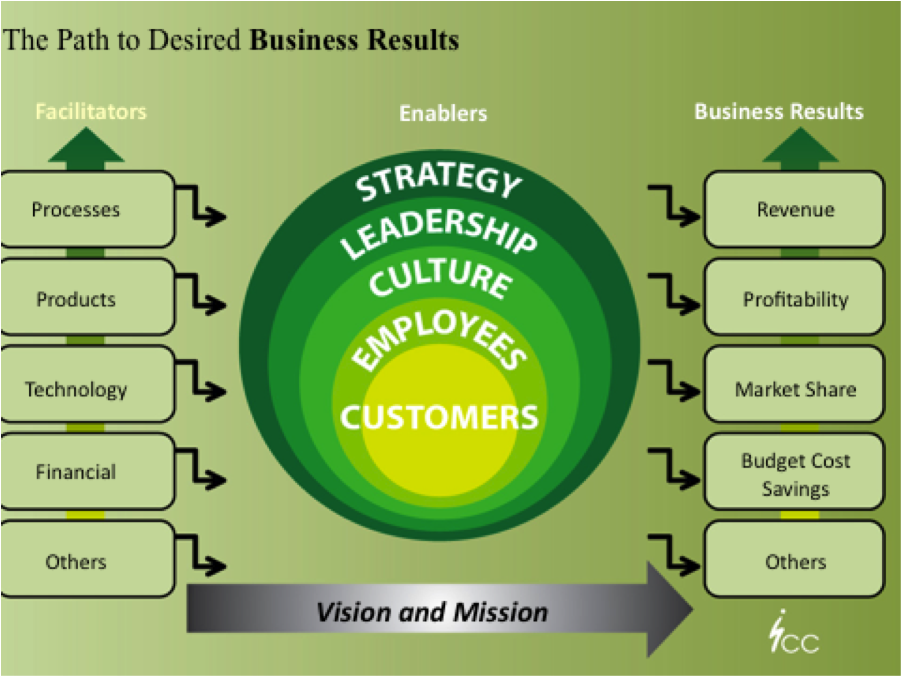
Here are a few thoughts in the context of engaging the whole company to create effective human networks:
Strategy: How do you define your market? It’s a human network of conversations that are smarter and more informed than ever. If you aren’t providing information and support, your markets are finding it among themselves and making you irrelevant.
Leadership: Are you having a conversation with your markets or providing talking points, corporate communications and PR? Markets can move quickly – away from you.
Culture: is it command and control you seek or hands on knowledge and respect?
Employees: This group is remarkably like your markets because they, too, are human beings who want information, support and conversations. Are you building networks for them to have meaningful exchanges? If you think your intranet fulfills this requirement, look at it again. Or, read about what Proctor and Gamble did to build its very successful networks for employees and customers.
Customers: They have a voice and they want to use it. You have a voice and they want to hear it. Not in brochures or web sites that have no substance. Not in the scripted “dialogue” with your call center. As the Manifesto summed it up, “You want us to pay? We want you to pay attention.”
We can invest in all the technology and processes our CFO will allow but if we don’t build in the human desire for connection and conversation, we will be talking to ourselves.
Wednesday, April 14, 2010
Got a Game Plan? Dispelling Some Myths
What's your game plan? Do you have one? Despite the rumors that strategy is dead, it's never been more important to know where you're going and how you're going to get there.