Showing posts with label BarbaraAHughes. Show all posts

Wednesday, March 30, 2011

What Do You Want From Your Data? Five Must-Have's


In a recent post, I wrote about the pitfalls of taking your data at face value and last week, I blogged about not knowing the true impact of critical organizational attributes without diving more deeply into the data (read: do more than explore it visually or look at up/down trends).

My business partner sent me an excellent article this morning by Stacy Harris that asks the question: Are You Considering Firing Your Employee Engagement Partner? I’ve been thinking a lot lately about data and how to make sense of it and I recommend this article for anyone else on a data journey. I think Stacy’s research applies to any type of data collection method. I’m summarizing what I took away from the article:

It’s not enough to have a survey; you need a strategy. A stand-alone survey gives you just that: one view whereas designing a survey that supports a business strategy provides data that can be aggregated with other data sets for a more accurate and complete picture.

If you ask generic questions, you get smiley or frown-y answers but no insight. Whether you have 12 questions or 40, if they don’t speak to your culture, your workforce or your targeted customers, I’m hard pressed to see how you will get any “aha’s” that are worth the time and expense of a survey.

What specifically do you want from a survey or any “listening post” that you design? “Because we’ve always done one” or “Because everyone else does it” are not specific objectives. What business issue do you hope to resolve? What’s keeping you or your boss up at night?

How are you analyzing the data? Scores alone may not tell you what you need to know. Trends without relationship to some rationale are just up or down points on a chart. Desktop tools exist to assist. Help is available (call me).

If you’re hung up on benchmarks, you may never get to the “why” of your own project. I know that some organizations swear by a benchmark study and who can argue, as long as the benchmarks map precisely to your own situation and as long as it’s not your only measure. Like generic questions, without the appropriate construct, a benchmark exercise can leave you with no specific roadmap for your success.

Collecting data is a critical component of every function these days. It's a project like any other, with objectives, outcomes and measures. Is your data giving you what you need?


Wednesday, March 23, 2011

Do Scores Matter if You Don't Know What is Critical to Your Customers?


Last week, I wrote about the importance of knowing what drives customer dissatisfaction, which dealt with data interpretation and the need to dive more deeply into the business issues as well as the data.

There are exploratory ways to interpret data and more analytical methods as well. The key to correct interpretation is knowing which approach will deliver insights to your business. As I said in my last post, coming to the wrong conclusions even with good data is a possibility without using the right tools. In the case of customer loyalty, you could be investing in programs that have little or no impact on the customer’s intention to buy again or you could be ignoring “dissatisfiers” that diminish a customer’s perception of your critical attributes.

So, there are a few initial questions to ask:

  • What do you believe are the attributes that contribute to your customers’ loyalty?
  • Are you measuring those attributes specifically in any data gathering exercise including social media monitoring?
  • Do you classify these attributes in terms of their impact on the customer or importance?

The example below is from an article titled Guests’ Perceptions on Factors Influencing Customer Loyalty, which appeared in the March 2010 issue of the International Journal of Contemporary Hospitality Management.

Customer Service : Dissatisfier
Cleanliness : Neutral
Room quality : Dissatisfier
Value for money : Critical
Quality of food : Dissatisfier
Family friendliness : Neutral

The authors selected typical product and service attributes for a guest at a hotel and designed questions around those.
Using simple regression, they did something very interesting and in my view very revealing about the data they collected. The usual loyalty question was asked (intention to return) and all other questions were tested against this one. Then, questions above a median score were tested individually and those below the median also were tested in the same way. The results were plotted against agreed criteria from Critical to Neutral.

Critical Attributes were significant in both tests and would be considered a driver of loyalty as well as a reason to switch. These have high compliments and high complaints. Performing well in other areas won't compensate for low performance here.

Dissatisfiers were significant in testing low performance but not when high performance was tested. So, if customer service is bad, it influences a decision to switch but an average experience doesn’t critically drive loyalty. These are the attributes that should be maintained but not at the expense of more critical ones.

Neutrals generally may not be noticed by customers and although bad performance would reduce perceptions of quality, it would not be to the point where quality is considered poor.


There are some lessons to be learned, I think, from this type of data interpretation:

  • Simple statistical tests are used in a way to deliver insight that would be difficult to obtain with exploring low and high scores alone.
  • Knowing whether a key attribute delivers the loyalty factor; whether it has no affect or whether it destroys loyalty is so valuable in terms of designing the customer experience and making the right investments.
  • This is the kind of "I know" insight that is compelling when reporting on Voice of the Customer issues.
How are you measuring customer loyalty? Do you know what is critical; which areas need only a minimum performance to maintain loyalty and which attributes have no impact on loyalty at all?

Tuesday, March 15, 2011

What's Wrong With Taking Survey Data at Face Value?


I’ve been designing survey questionnaires and analyzing the data for so long that I often forget that some people may not be doing the deep dive and asking the hard questions of the data they’ve collected and for which our clients hire us (thank you, you know who you are). Maybe a little exploratory analysis, a tad of correlation, a glance at the verbatim comments and we’re done until the next time. Did we do a survey? Check. Did we do anything with it? Sure, sort of. Do we have a deep understanding of what the data means? Well….

What’s worse than not gathering intelligence from customers and employees?
Coming to the wrong conclusions!

I’m reminded of this fact by two articles I read last week: In This Case, Let’s Examine Dissatisfaction in the February issue of Survey magazine and Guest Perceptions on Factors Influencing Customer Loyalty in the current issue of the International Journal of Contemporary Hospitality Management.

In the case of customer dissatisfaction, the article suggests several calls to action:

Understand whether you have a category problem rather than a brand problem. In other words, your competitive space may allow easy switching with or without loyalty programs so make sure you know what your issue is before investing in programs that will not alleviate it.

Your market strategy will drive a customer’s perception of satisfaction. If you are a low cost provider, you have accepted that a lower level of quality and service is part of the equation. The danger zone you could find yourself in is in trying to be low cost while also attracting a customer who looks for a different level of product and service.

Benchmarking. I’ve never been a fan but lots of companies do it and the swirling vortex that you get sucked into is that you compare your performance to companies who target different customer segments.

Dissatisfaction may not arise from what you do but rather what other, similar companies do that you don’t do. Customers constantly evaluate decisions based on alternatives; some amount of dissatisfaction arises with your product and service even if you are executing your strategy perfectly.

My suggestions for arriving at the best conclusions possible from your data analysis:

  • Keep your strategy upper most in mind when designing the project and return to it often when analyzing data. This means knowing who your competition is; who the ideal customer is and what your competitive advantages are.
  • Design survey questions to be particular rather than general. The more generic the question, the less likely it is that you have actionable data and the more likely you potentially are arriving at the wrong conclusions.
  • Don’t confuse happy with satisfied. If you want to meet a customer’s needs, you are aiming for satisfaction. If you want happy, that’s a whole different level of expectations.
  • Perform data analysis from several different perspectives. Not all survey questions should be treated equally in reaching conclusions.
I’ll write more about the last topic next week.


Wednesday, March 2, 2011

Can You Hear Me Now? It's Your Customer Calling


Does anyone still breathing believe that we can succeed without customers? I didn’t think so. If people don’t want what we’ve got to sell, we’re toast. So, there should be no argument that customer satisfaction and loyalty are goals we should be eagerly pursuing since the pundits tell us that it costs five times as much to acquire a new customer as it does to keep one.

I know, some of you are saying satisfaction and loyalty, yes, “but not at all costs” and “not the wrong customers for our business”. Exactly. So how are you managing those customer issues for your benefit and theirs?

Hello? I’m Out Here and Here and Here…: There are so many channels from which to collect customer feedback and each one potentially provides data gold. However, what is interesting may not be useful. Before buying, jettisoning or adding onto your business intelligence platform, a game plan is imperative.

Customer orientation is a critical part of developing a business strategy. It’s hard to describe competitive advantage and competencies unless we’ve defined how we will deliver products and how we will serve our customers. Business intelligence needs to be aligned with both strategy and customer needs. A company’s market research used to be private; now it is open and available on every social media outlet and search engine just by mining customer comments. We shouldn't ignore the qualitative nature of data and fail to integrate that into other customer data sets as it is necessary for ongoing strategy development

See Your Company Through Your Customers’ Eyes: It’s disappointing to deal with companies that seem to have no idea how many customer touchpoints they have and infuriating that they are not integrated. It’s inexcusable that frontline employees are neither selected nor trained for a service job. If you invite some of your co-workers into a room with a big white board and start mapping customer interactions, it is a mind-boggling exercise. Or, just read your customer comments online.

Create a Single View of a Customer: I’ve said it before: customers do not care about our silos. It’s not their job to sort out which department is responsible for resolving a problem. A fragmented approach rather than Outside-In customer experience design means that your employees have a perspective of your customer based on their job roles not on customer expectations.

It’s Called Voice of the Customer: I design a lot of feedback and research surveys and I am sent a few as well. It takes me less than 30 seconds to decide whether or not I’ll complete a survey depending on how it’s constructed. Questions should be properly worded and of an appropriate length; be free of bias; be actionable and be linked to the customer experience as well as the company’s metrics and Key Performance Objectives.


I’ve been on a data and analytics soap box for a while and there is no doubt that through collection of behavioral, rational and experiential data, we are doing a better job of knowing who buys from us and why. To understand what we didn’t sell and why requires tapping into customer emotions. Maybe someone will develop an App for that. Until then, we have to collect, aggregate and understand qualitative data to hear what are customers are feeling as well as saying.

To paraphrase a line from my newest favorite film, The King’s Speech, your customers have a voice. Yes, they do.


Tuesday, February 22, 2011

"Even the Longest Journey Must Begin Where You Stand"


The quote is from Lau Tzu, the Chinese philosopher-turned-management-guru -- and I like it for a couple of reasons. First, it’s so true: you have to honestly appraise your current situation in order to reach any goal. Secondly, no matter how bold your strategy, you can’t obfuscate the situation, thinking that strategy only needs to be stated to be accomplished. As any successful person will tell you, there’s a lot of sweat equity that has to be paid between where you stand and the journey you take.

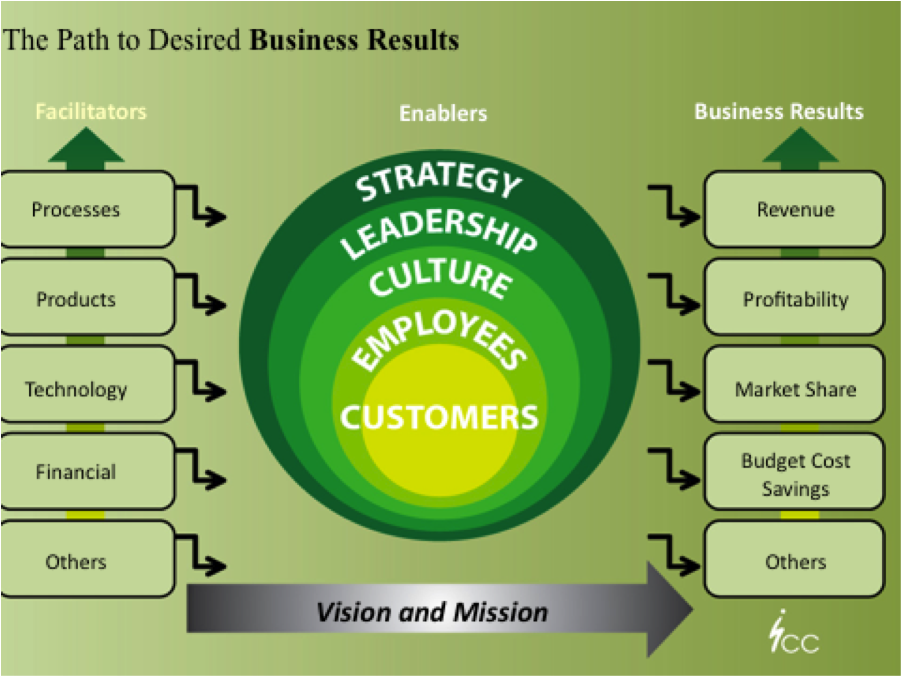
As you probably know by now, I’m fascinated by data and passionate about analytics and how both will transform our businesses. However, it’s a journey not a sprint and begins with assessing what we call "the path to desired business results":


There are five key drivers of performance in any organization and while analytics might be the means to an end, these enablers are the catalysts. So, standing where you are now, it’s worthwhile asking the following questions:

Strategy: How will analytics help us compete successfully? Will we be able to differentiate ourselves in our markets using analytics?

Leadership: Are we as leaders prepared to commit the organization to an analytics based way of making decisions? Can we give the employees who will have to make this work the buy-in they need to be successful? Can we put aside our impatience and allow them to Think Big but Start Small?

Culture: Do we have data fiefdoms that refuse to share data or collaborate on projects? Do we celebrate the efforts of the early adopters, even if success isn’t guaranteed every time, in the spirit of discovery and experimentation? Analytics is all about experiments, testing, and doing it over and over. Have we made more of our decisions by the seat of the pants and been proud of it?

Employees: Do we want analytics to cascade down into the organization and, if so, are we prepared to properly train those whose jobs it will be to manage the technology that supports their business knowledge? Are we hiring employees for competencies that underpin the need for a broadly based analytics movement?

Customers: This is one area of most businesses that has received the most analytics attention so the questions here are: is our customer data in one place, is it at the lowest level of analysis possible and have we aggregated it across all of our channels?

The analytics journey is probably never ending as technology and competencies improve exponentially to deliver more insight with less complexity. But, knowing where you stand before you take the first step – or flying leap – will ensure that this critical initiative doesn’t crash and burn at the first turn in the road.

What is your analytics journey like? Are you looking first at where you stand or sprinting off for the unknown?

Tuesday, February 15, 2011

Transform Your Metrics From "So What?" Into "Who Knew?"


There are a lot of 3D movies out; have you noticed? I don’t seek them out but I appreciate the fact that people may enjoy a film more when it is multi- dimensional and they can feel immersed in the action.

I think we get too fond of our metrics; we have them because we’ve always had them. We track metrics and manage them and present their variances against performance goals. The problem? They often are one-dimensional and not very meaningful outside of our own function. And, if they aren’t tied to a real business outcome, it’s hard to make a case for the programs we want to implement. We may not monetize metrics, which is the language of our bosses; so there’s a sense of “so what?” when we present.

So, how do you make a common metric like turnover (employee or customer) more 3 dimensional and get people immersed in your action?

Embed Metrics With Data: Not just the obvious data of people in/people out. Drill down; explore data. There’s an “aha” in there I promise and since you have the business context, there is no one better positioned to see it and explain it.

Use Data Sets from Other Departments: Make your metric multi-dimensional by bringing in data from HR, Sales, Marketing, Operations, Process, Call Center: whatever data set you have, add to it in a smart way by collaborating with other departments who also have valuable data that isn’t yet insight. We have to dismantle data fiefdoms and share. Where does turnover impact the business? How does it impact the business?

Try Simple Statistical Tests: This is the point at which people click off because they think it’s not in their skill set. If you have Excel on your PC, you have a statistical toolkit. Invest in a great little e-book that provides a huge amount of good information and it is well presented (Using Excel to Solve Business Problems by Curtis Seare). Try out various assumptions to see which are more powerful. Who is leaving? What is driving turnover? How does it affect customers? How does it impact employees? Where does it affect business goals? Experiment with results and keep testing.

Provide a Business Context: Sometimes people get hung up with statistics, even simple ones and forget that the most important point is taking what statistics can tell you and mapping that to what you know about the business.

Tell Me Something I Don’t Know: aka Monetize the Results. When you know what turnover really costs the company and what it costs to improve the situation, you will have the attention of people who haven’t seen your metrics/data/ideas presented in a way that they understand.

Then, your metrics are multi-dimensional and provide real intelligence for the organization.

How are you helping your decision-makers get immersed in your metrics? Are they in 3D?

Thursday, February 10, 2011

What Kind of a Boss Are You Anyway?


The title of today’s post came from a reader who sent me an email after my blog about employee commitment. There’s a lot of pent up frustration out there about us mangers, People, and it’s bound, as my reader suggested, to chase away your best and brightest.

As someone who likes to research a topic in order to develop it properly, I’ve done my due diligence and here is how some of the issues stack up. Do you recognize even one that applies to you? If so, there are things you can change IF you have the heart and mind to do it.

Don’t Believe All the Stuff You Read in Reviews: only Paris Hilton does that. Put your own boss’s comments in context. Is she bad about having productive performance conversations and the annual review (if you even get one) is rushed and bland? Maybe you should ask your team how you’re doing and really listen for feedback.

Are Your Bad Habits Rubbing Off on Your Staff? Are you continuously late to team meetings or do you regularly ask employees to work extra hours because you couldn’t get your act together? As Stephen Covey said, being in the thick of thin things means that the important things never get done – until they reach a crisis. Putting out fires is not the measure of a good manager or leader no matter how good that adrenaline rush feels.

Do You Show Genuine Respect for Other People? I confess: I absolutely hate people responding to email and texting during meals and meetings or continuing to work while I sit there for a scheduled meeting; and the only functioning brain in the room is mine because the other person erroneously believes in the myth of multitasking. It’s been proven that multitasking is less productive than attending to one thing at a time and following through on it. If you don’t respect my time or the purpose of the meeting, don’t call one -- or me.

You Went on the Leadership Courses; Now What? I’m not one of those people who believe that leaders are born not made although the potential needs to be there. Winston Churchill was a terrible peacetime leader but he understood what it took to lead in the darkest of times. I don’t think he went on a course to develop that skill set. The point is, leadership training can be generic and disconnected from either your job or your organization’s culture; making it very difficult to apply the content in everyday work. The best recipe is training that is a direct result of a good performance review (not filling up a predetermined number of annual training hours) coupled with mentoring and coaching. Being curious and unafraid to ask questions are also vital development tools.

As managers, too often we don’t take stock of our own performance and how it affects the people who have to make things work on the team. Are we lazy or in over our heads? Are we modeling the behaviors inflicted on us by our own bosses? When you find one day that your best people are leaving, you may need to own up to the fact that people rarely leave their jobs; they leave their bosses.

We’ve all had great bosses. Who were yours and what made them great?

Wednesday, January 19, 2011

Interest or Commitment: Knowing the Difference Could Change the Way You Manage


One of my clients recently sent me this quote from Peter Drucker that has had me reflecting on its true message and how it is applied, especially in business:

“There is a difference between interest and commitment. When you are interested in doing something, you do it only when circumstances permit. When you’re committed to something, you accept no excuses, only results.”

For me, being interested implies a passive mindset whereas commitment seems active, which is confirmed by dictionary definitions: “the trait of sincere and steadfast fixity of purpose”. While interest is associated with curiosity about someone or something, commitment is the “act of binding yourself (intellectually or emotionally) to a course of action.” Interest is more cerebral perhaps while commitment is both cerebral and visceral. Isn’t commitment what we want and need in our organizations to be successful? When leaders talk about connecting to the ‘heart and the mind’ aren’t they referring to commitment?

I have a few thoughts on how to listen for and instill commitment day-to-day in our businesses:

Strategy: is business strategy a story that inspires people to bind themselves to the direction in which you want to go?

Leadership: before employees are committed, leaders have to demonstrate their steadfast fixity of purpose. It’s a trait not a slogan (“We are committed to our employees.” “We are committed to our customers.”)

Culture: is the business environment a community that binds people together to achieve a common purpose or a federation of possibly interesting activities?

Employees: is the hiring process geared more toward uncovering interests than discovering commitment?

Customers: do we expect commitment from our customers while only being interested in what they can do for us?

The late Peter Drucker’s ideas and writing continue to provide enduring lessons of what motivates people and moves organizations toward a higher level of performance. As I said to my client as we exchanged emails, Drucker was a no nonsense thinker who understood the duality of our 'heart and mind' selves.

Does anyone have a favorite Drucker thought?


Tuesday, January 11, 2011

"If You Can't Explain in Plain English What You're Doing, You're Probably Doing Something Wrong"


Many of us are guilty of it. Using multisyllabic words, acronyms and jargon to explain our ideas. The quote in the title is from the late Alfred Kahn, an economist who loved words as much as numbers. To the listener or reader this type of doublespeak comes off as smug and annoying. Is this code for “we are in a club that knows what you don’t”?

For those who are trying to convey important ideas and thoughts, it’s downright counterproductive. If your audience doesn’t understand your meaning, what’s the likelihood that you will get what you want from the exchange?

I know, sometimes we just forget who is in on our jargon and acronyms; but that’s not an excuse. Do we really need to rename books “reading containers” as the VP of Amazon Kindle did recently? Is it more clever to describe a strategy to grow rapidly as being “in a delivery window for new growth”, which is what Royal Dutch Shell has done? Is being opaque a tactic to confuse the competition or the analysts? Heaven only knows what employees and shareholders make of this type of statement. More importantly who can engage with it?

Alfred Kahn probably had the best advice on the topic: “If you can’t describe what your model says in plain English without provoking derisive laughter, it probably doesn’t say anything of value.” Perhaps it sounds somewhat harsh but most of us who write and speak for a living probably could use a wake-up call from time-to-time.

So, the next time you have to present to or communicate with those not in your Acronymic Jargon Club, think about the objective of the exercise before you unleash HIPPA, CRM, BI, up-skilling, Title VI, VOC and the thousands of other “welcome-to-my-exclusive-world” concepts on an unsuspecting audience.

For a cringe-worthy read of other verbal and written disasters, I offer Lucy Kellaway’s article, My Awards for Management Guff on FT.com. It just makes me wonder how we got this way and whether there is any therapy for it.

Wednesday, January 5, 2011

To Prune or Not to Prune? It's Not Only For Gardens


I’m a wanna-be gardener; so I listen avidly almost every Saturday to a popular local radio talk show about gardening. Last week, a caller offered three reasons for pruning and he suggested that these reasons apply to every day living, too.

So, we prune in a garden:

To protect health
To encourage a different direction
To promote growth

I used to be afraid of pruning; scared I’d forever damage the shape and dimensions of trees that were planted long before I arrived. I’ve learned, though, to step back and look at my subject from its totality and to see limbs that didn’t survive a winter storm or that were growing against others and would eventually cause disease. With fewer boughs and branches, more light reaches the interior and making the cut at the right place encourages growth in the right direction. The future shape of the tree is determined by my own eye, hand and perspective.

Not to belabor this metaphor too long, but the gardener had the right idea, about trees -- and people and businesses, too. Here are my thoughts on the business side:

To Protect Health:
  • Have the right tools to do the job and get advice and input when you need it.
  • Use your wisdom developed through experience and maintain the courage of your convictions. Then, make an informed decision.
  • Look at the shape of your organization: is it hindering the way things need to be done today?

To Encourage a Different Direction:
  • Take a step back and view the totality of your business or operation. Don’t wait until there is a crisis or an economic meltdown to act. You get no points for that.
  • Set a course with your strategy, have a back-up plan and review often. Things happen too fast to set anything in stone.

To Promote Growth:
  • Shine a light on your internal processes, management practices, customer relationships and organizational culture. What is holding you back?
  • To know where you’re going, you need to know where you’ve been and where you are. It’s going to take a lot of good data to provide insight that leads to great business decisions. This is the time to bring Business Intelligence from the IT department to the entire operation.

What kind of business gardener are you? Are you promoting health; steering a new direction and encouraging growth? It's a great time of year to start pruning.

Wednesday, December 29, 2010

Why We Love Predictions So Much & 3 of Mine


Have you had enough of the look-backs at 2010 and the predictions for 2011? Apparently, most people haven’t, which is just as well, judging by the number of blogs and articles hitting my RSS feeds, Google Alerts and email box. Why do we love predictions so much?

Humans are unique in the animal world in that we can detect and make meaning from complex patterns all around us that result in decisions about how we should behave, think, live our lives and so on. Predictions – our own and others’ – are aggregates of these patterns so we find them confirming or interesting or sometimes just weird but we pay attention to them.

We have a strong need to exercise individual control, some of which is cultural and some of which is human. Getting a handle on the possibilities for the future, gives us a sense of mastery, self-esteem and even optimism. We tuck these predictions away in our memory banks and they become part of our pattern recognition process.

According to Dr. Shelley E. Taylor, a professor of Health Psychology at UCLA, “positive illusions” about the future are mentally and physically healthy; they improve the ability to care for and about other people and they increase the capacity for creative and productive work.

As predictions seem to be so important to our general well being, I’ll offer three of mine for the business environment:

  • CEO’s will be more open to experimentation at work BUT these experiments will be verified by analytics. Managing risk is still hugely important in this fragile economy. Trust but verify.
  • Social capital will become a key hiring criteria for positions that influence business performance. The quality of a person’s relationships will become as important as her experience and skill set.
  • Customers will be more quixotic than ever and companies will make even larger technology investments to try to predict their moods, behaviors and buying intentions. Whether these investments pay off will depend upon:
  • Business Strategy
  • Organizational Culture
  • Quality of Leadership
  • Employee Fit
  • The Right Data, Metrics and Analytics

As a recent blog from IBM stated, there is no ROI from Business Intelligence unless someone uses it to make decisions.

Happy New Year and let’s get 2011 started!!

What are some of your predictions for 2011?


Wednesday, December 8, 2010

5 Predictions About Analytics, 4 Tips to Get Started & 3 Cautionary Thoughts


This is the time of year for predictions and there is no shortage of them in the analytics arena. As business owners and managers are redoubling their efforts to find competitive differentiation amid tepid growth projections for 2011, analytics is seen by many leaders as a way to gain an edge.

There are a few key predictions that are shared by seasoned analytics champions and neophytes alike:

  • Organizational data is proliferating at an alarming rate, both in terms of volume and complexity. How to make sense of all of this data will be a challenge for those not on the analytics bullet train.
  • Desktop analytics will dominate the business environment, making large servers and high cost analytic languages no longer able to return the desired ROI.
  • Mobile applications will be hot topics. Devices like iPads, smart phones and tablets will bring analytics into end users’ hands like never before.
  • The gap between heavy analytics users and laggards will continue to widen and it will become apparent in areas like innovation and product development as well as bottom line results.
  • Privacy regulations could make the collection of personal data more restrictive. At the same time, individuals may balk at the idea of how much of their private information is in the hands of third parties.

Michael Lock of the Aberdeen Group and Caroline Seymour of IBM’s Mid-Size Business unit have some helpful pointers for companies that are taking their first steps into business analytics:

Get Control of Your Data: This means bringing disparate buckets of data into a consistent environment so it’s easier for more people to perform multi-dimensional analysis.

Analyze Data in a Business Context: Data analysis in isolation provides no insight and therefore has limited value to the business. Analytics works for the organization when there is a business strategy to address outside pressures, an assessment of capabilities and analytical needs and the ability to use analytics across the organization.

Think Big – Start Small: This is what Michael Lock calls the Land and Expand strategy. Start with one unit or one pain point and work up to the enterprise level of data consistency. Match resources to the company’s budget.

Empower Non-technical Users: 77% of the Best-in-Class companies measured by Aberdeen Group have what they call “pervasive Business Intelligence with self-service usage”. Only 10% of the Laggards have it. End users have the business knowledge, the business context and the ability to create insight from data.

I’ve been involved in so many fads du jour, from reengineering to knowledge management. All of the concepts were stellar but became hijacked by (gasp!) consultants selling technology or off shoring services or some effort to gain short-term advantages. The problem seemed to be either that the ROI assumptions were inaccurate or that consultants rarely stayed around to see the business through the painful change that inevitably comes with disruptive innovations.

Now for the words of caution...

Leaders Drive Change. That’s what GE’s CEO Jeff Emmelt says and I believe him.

Culture Trumps Strategy. Becoming an analytics-based business means behaviors change across the board. This is often left off the To-Do list.

The Collective Mindset Needs to Shift. If data is a source of power in the organization; if people think they’ve been successful making “gut” decisions; if collaboration isn’t in your vocabulary, you have some work to do to build a successful analytics-based company. But, the rewards are going to be huge.


Monday, November 29, 2010

Business is Unforgiving. Get Used to It


“Life isn’t just about what you want to be. It’s about what you are.” I read this quote from John Rowe, the CEO of Exelon, a Chicago based energy provider in a recent BusinessWeek. His comment got me thinking about how important it is in strategy development to know your starting point.

I’m a right-brained thinker so big ideas, conceptualizing and embracing change are my natural starting points. Nothing is more exciting than new flip charts, fresh white boards and eager faces, ready to brainstorm the heck out of the future.

But wait…that’s a ready/fire/aim approach and because business owners and leaders are more risk averse than ever, it’s essential to use a structured process for evaluating strategic issues in the right sequence to give equal prominence to all aspects of thinking about the present and the future.

1. Frame the issue(s): this first step includes asking the “where are we now” question as well as understanding why we are considering a change in direction (what we want to be).
2. Generate ideas that answer the above questions.
3. Evaluate the options based on facts (resources, competition, etc.)
4. Consider the options based on perceived level of organizational change required and amount of buy-in necessary to be successful. (Do we really want to change and can we sell it to others?)
5. Develop “what-if” scenarios for each option to refine the degree of difficulty and to assess the risk management/risk mitigation challenges. (Where are our back-up plans?)
6. Agree on best course of action based on Steps 1 through 5.
7. Create an action plan designed for implementation, that is, one with timelines, accountabilities, ownership and success metrics.

In the current business climate, we can be too timid, because the future has so many unknown variables OR too bold because our strategic process doesn’t start with "what we are now". Being clear about our present doesn’t diminish our ability to generate innovative ideas for our future; being grounded in reality actually ensures that ideas become more than dreams.

Tuesday, November 2, 2010

5 Tips to Take Your Strategy Beyond "Hope"


I just returned from a two-day planning session with my business partner. As I said in a recent blog, a plan is nothing; planning is everything. This is the season of the budget and also, hopefully, strategy development, so I’d like to offer my perspective on the things that can make your strategy discussions more productive:

Get away if you can: staying in the office is a terrible idea, mostly because there is a clash of priorities; and the immediate and urgent (but not necessarily the critical) almost always win.

Begin with the end in mind: Thank you, Stephen Covey. For our business, this meant going out to 2014 for a lot of good reasons, including succession planning. Many initiatives can take several years to get right and leaving them until they are urgent is risky in today’s business environment.

Swim into a Blue Ocean: even if it’s going to take longer than 12 months (which may be a long time in American business), dare to create scenarios where your business is doing new and innovative things. This kind of activity expands your thinking and generates more options. Without ideation, your "ocean" gets redder by the minute, as the sharks circle the boat. By the way, reading Blue Ocean Strategy is good preparation for a strategic retreat.

Bite the bullet and take on the tough stuff: Effective strategic thinking means putting the skunk on the table. If you don’t talk about what’s hard, opportunities may never present themselves and, at the same time, challenges are never articulated until they rear up and bite you. Then you’re stuck spending a lot of useless time cleaning up after the skunk.

Boil down your strategy into a memorable sentence: a strategy statement by its nature can be complex and the risk is that a critical piece of your business becomes lost in verbiage. Try explaining two paragraphs of strategic direction to your employees and watch their eyes glaze over. We got ours down to “In It to Win It”. It means something to our company and it’s a lot easier to make decisions when judging them against an easy-to-recall strategy sentence.

The first step in any strategic thinking is to leave the spreadsheets and PowerPoints at the office and focus on the future. Whether your company is large or small; whether you head up a department or the entire business, strategy demands attention and dialogue. Are you using this budget season to take your thinking about your company to a new level?


Tuesday, October 12, 2010

"A Plan is Nothing: Planning is Everything"


President Eisenhower knew what he was talking about. As a general directing European operations during World War II, he understood the power of determining a plan of action and then constantly communicating it, evolving it and refining it as information came into his camp.

Are our business situations any less mission-critical today? I understand that we aren’t in armed combat (although it does seem like it sometimes) but when you run or own a business, it sure feels like bombs are being lobbed from all corners.

Really, nothing about the fundamental importance of business strategy has changed for 65 years except:

  • Businesses don’t like to do it (“takes away from the REAL work”)
  • It takes too long (“you don’t understand, things move too fast in our world”)
  • Nobody seems to know what he or she are supposed to be doing (they got the email, the slogan and the mug but things dropped off fast after that)

I just finished a one-day strategic planning retreat for a client involving the senior team (yes, I did say one day). Part of the secret sauce in this recipe is doing work up front so I designed an online assessment that got at the heart of the strategic issues. All of the verbatim feedback was put into word clouds (www.wordle.com) so the areas of strongest commonality of thought were prominently displayed.

We used small group and large group activities to define Mission, confirm Values and design the five Big Rocks that became the positioning statement and strategy for the next 24 months. Because the word clouds so powerfully illustrated Opportunities and Challenges, we were not struggling throughout the day to agree on these items.

There is one more day to set 12-and 24-month goals and I use a simple spreadsheet that combines long- and short-term goals, action plans and metrics. It displays the Mission and Values so they never are forgotten in the planning process. This document is the North Star for the client: guiding strategy execution and ensuring that decisions are in line with Mission and Values.

The communication piece is so important -- and frequently not designed -- because everyone in the organization has to know what direction it’s going in for the foreseeable future. That is part of the second day goal-setting workshop. I believe we can boil the strategy statement down to “let’s get a man on the moon by the end of the decade” as President Kennedy did. That way, we lessen the risk of failure to execute.

Business strategy doesn’t have to be a 12-month cycle of PowerPoint presentations and number crunching. I don’t think either General Eisenhower or President Kennedy had that luxury of time. Both understood that planning is far more powerful than the plan and that communication is the trump card for execution.

What planning do you do in your organization? Is it a PowerPoint or a Word Cloud?


Wednesday, September 29, 2010

Has Management Become Just a J-O-B? Five Enduring Lessons


A couple of weeks ago, I asked whether ‘management’ is obsolete. As a discipline, it’s less than 100 years old and emerged in response to the large and complex organizations that grew after World War I. Management doesn’t have an exam like the law or licensure like medicine to demonstrate proficiency. Nevertheless, management is a difficult practice that many have come to with poor training and confusing expectations. And yet, while some practices must change, there are some enduring lessons about management I’ve learned during my career:

Embrace Your Outliers: I had a manager in London who was gender blind and that was a real asset to me, who wanted to be one of the first women to present insurance risks at Lloyd’s of London. It was about competence and potential, not whether we used the same bathroom.

Get a Mentor; Be a Mentor: One of my favorite managers made it his job to take on new recruits in a structured way to develop our skills and show us the ropes even if we were not in his department. He insisted that we give back by becoming a mentor and I found that teaching was the best way to learn.

The Better You Are, The Better I Look: This was the philosophy of a dynamic manager who made a point of surrounding himself with the best people he could recruit. The team couldn’t have been more different and while that caused friction, it also made for amazing innovations, growth and surprising agility. I learned from him that diversity of thought is a competitive advantage and that as change is the only constant in business, it was advantageous to get out in front of it or get out of the way.

Make a Decision: I once asked a manager for feedback on areas to improve after a performance review. He thought for a minute and then said, “Don’t take forever to make a decision. Gather information, hear opinions and then make a decision. You can always modify it but people hate dithering.” Good advice.

You Are the Culture: If you are a manager, even if you aren’t the uber-manager, you set the tone for your department. People learn the way things are done from you, good or bad. Employees don’t leave their jobs; they leave their managers. A hard lesson I learned as a manager was when I took over from someone who had very different ideas about what it meant to manage. If I had to do it over, I’d spend a lot more time changing the culture before thinking I could change anything else.

I agree with Gary Hamel that management processes have to be redesigned to take account of new organizational structures, different workforce dynamics and technological advances. His Management Innovation Exchange is an open innovation project aimed at reinventing management. It doesn’t mean throwing out every good thing we learned as managers; it’s just about kicking out what no longer works, like celebrity managers.


Monday, September 13, 2010

Waging the War on Bureaucracy: Is Management Obsolete?


Sorry if you choked on your doughnut while reading the title but, really, there has been so much written about CEO’s and their lack of ethics but their abundance of perks; about how leaders are failing every stakeholder they answer to and about how, like the dodo, management as a practice is becoming extinct.

How did things get this bad? Like Wile E. Coyote, didn’t we see Roadrunner aiming that anvil right at our heads?

Here’s my theory: we brought it on ourselves; we asked for the anvil. Why?

  • We continue to hobnob with people who look like us and think just the way we do.
  • We ignore social media as a passing fad or something IT needs to eliminate from employees’ Internet permissions.
  • We haven't picked up on the fact that people are organizing online in communities that criss-cross time zones, date lines and borders to innovate, collaborate and create their own products and services. What's irrelevant are buildings and organization charts and titles.
  • We talk engagement but secretly believe “they” are lucky to have a job.
  • Change is for everyone else.
  • We've been drinking the Kool-Aid of “shareholder value” as the only means to an end.
  • And follow it up with a chaser of re-engineering as a synonym for de-layering, downsizing and off shoring (but, oh, that short term lift to the bottom line!).
  • We are rock stars, aren't we?

I held management positions for twenty years; I know what it’s like to slog away and then be rewarded for my efforts with a fancy title and a fancy car. The problem is, the Roadrunner is on our tails, with a stick of dynamite.

I am really raving about this issue because there is so much more that managers can do not only save ourselves but also to make a difference in our companies and to the employees who report to us. For a less heated rant, I recommend an article titled, The End of Management by Alan Murray, which appeared in the Wall Street Journal on August 21st.

In my next blog, I may rant less and offer a few solutions to an issue I didn’t know meant this much to me – until now.

Tuesday, September 7, 2010

Three Big Trends That Will Change the Way You Make Decisions


I attended a seminar this week on predictive analytics, a topic some say would cure insomnia. But, I found the trends important and worth more consideration by anyone who owns a business or runs one or is employed by one – so the majority of us.

I love data, even as a totally right-brained person, because it has a story to tell. The problem is we’ve exhausted the process of using lagging indicators to produce insight about future decisions. Companies should be moving from silos of data hoarded and rarely aggregated to a point where employees collaborate and make real time, fact-based decisions based on modeling organizational data and assessing the power of one choice over others to achieve results.

A few years ago, Thomas Davenport wrote a book titled, Competing on Analytics and cited large companies such as Marriott, Harrah’s and Progressive Insurance as the analytics champions. Not much hope for the rest of us, is that what you’re thinking?

Here’s what I learned from that seminar and I believe it is important for businesses of all sizes to get really clear about the implications of these trends:

Analytics are moving downstream. What was once done by a cube farm full of PhD’s will be done by us regular people who are tasked to come up with hard evidence for what we do (market, train, deploy technology, in short, everything). Technology will make it possible to collaborate with other functions to aggregate data and perform our own statistical and predictive work. On our laptops. In real time. Maybe a lone PhD floating among us.

Analytics are moving into every function. No longer will we be able to get by with a "I -can’t- quantify- the- ROI -of –why- I –need- this- money- from- the- budget-but- trust-me- on- this". Jack Fitz-Enz said it best in his new book The New HR Analytics: if the HR department doesn’t feel up to handling human capital issues in a quantifiable, predictive way; the C-suite will give the responsibility to someone else. That holds true for every function from Marketing to Customer Service.

Predictive analytics are a competitive advantage. At a time when we all are looking for the Holy Grail of business success, if your company isn’t starting now to explore the concept, it could find itself out-maneuvered and shut out by the competition.
  • What if your competition could predict which of its customers was likely to defect in 6 months and offer them a sweetheart deal before they are out the door?
  • How much money will you spend trying to woo a customer that isn’t interested in moving her business to you because you don’t know which behaviors trigger a purchase?
  • What if you could predict which employees had the greatest power to impact customer loyalty and could increase the likelihood of retaining them by customizing their rewards and recognition?

Am I going to turn away from my intuition or sense of what feels right in favor of analytics alone? Heck no, but using both is the right equation: Intuition+ Experience + Analytics = Insight + Results.

How about you?

Monday, August 16, 2010

Who Does Our Customer Experience Satisfy: The Customer or Us?


These days, who isn’t looking to create efficiencies in every work process, transaction and function? When we evaluate our options to be more efficient, can we quantify the impact on the customer and the employee?

I read a good article on the Great Brook website about customer experience management, which, the author contends, is looking from the wrong angle: the experience is designed; then managed to greater effect for both customer and company.

The article cited the notorious example of the JetBlue (ex) employee who went ballistic because of a rude passenger and, while he may have 90,000 “friends” on MySpace, he doesn’t have a job. The article examines the system from two perspectives: the customer (JetBlue actually refers to its passengers as customers) and the employee. The ultimate issue is not employee engagement per se or customer loyalty; JetBlue comes up well in research into both areas. It’s about how well the process has been designed to promote more harmony and less frustration; more engagement and less bad behavior; more loyalty and less attrition (or banging of stuff into overhead bins).

The crux of the problem in so many industries is that workflow and processes are designed from the Inside-Out, and the fact that the customer is actually a key component of the process isn’t factored in. All our side of the ledger shows is how much time and money saved and wasteful steps eliminated -- for us.

The burden of negotiating our unhelpful web sites, hellacious voice mail systems and confusing online storefronts calls falls on the customer; but when is the ensuing frustration accounted for as a cost? And, who measures the impact of (dis)engagement when customers’ anger and frustration are taken out on the front line employee?

When customer feedback says “I want self-service on my schedule, preferably online”, this is not a license to implement any sub-par system on the basis that because the customer has indicated a general preference, anything we implement is bound to satisfy needs.

I’ve spent a lot of time in business process redesign and there is no doubt that there is a smart way to do it and a really stupid way. Let’s outline the smart way and you’ll figure out what the stupid way looks like. When mapping a process that in any way involves customers:

  • How are your customer interfaces designed? Inside-Out or Outside-In?
  • What tasks are you asking customers to perform instead of you?
  • Are you making the process efficient for the customer or just you?
  • Are you saving yourself time at the expense of the customers’ time?
  • Have you asked your employees which of your processes cause the most frustration for customers?
  • Have you asked your customers the same question?
  • Have you quantified the costs and benefits of your processes on your customers or you only?

Part of the employee engagement/customer commitment linkage is having processes that respect both parties who are expected to use them. Bringing a customer to the point of anger with an employee means that everyone loses.

Are you designing your processes Outside-in or Inside-out? Do you measure your own benefits from efficiency or do you think about the cost to your customers?


Sunday, August 8, 2010

Hot Customer $ervice in the $ummer Time


We’ve been sweltering through a crispy summer in Atlanta and I finally had to bite the bullet to install a new HVAC system.

Of course in these new days of austerity, it wasn’t a matter of picking the prettiest system; oh no, I had to do my homework. Onto the web sites I went, looking at systems, any deals that could be available and, most importantly, what my friends and neighbors are saying about the two contractors I short-listed.

While I had used a locally well-known provider for 15 years, I had a very disappointing experience with one of the company’s executives last year. However, I decided to give them the opportunity to make a service recovery and quote for my business. And, I added another local contractor that had very positive online reviews. Both quotes were very similar but I couldn’t shake the bad experience I had had with my current vendor.

After dithering for a month (it’s $10,000 after all; not exactly an impulse purchase), I phoned the sales person for the second contractor. We discussed scheduling and the fact that in this Sahara-like summer, I couldn’t do without air conditioning for a day and a half. Without hesitating, he arranged to bring a room air conditioner 5 days before the work was due to start because “there is no reason why you have to be uncomfortable”.

Do I have to tell you who got the business?

Bill was on time and dutifully dragged the unit upstairs and down until we found a window that would accommodate it. He installed it, tested it and ensured there was no escape of precious cold air into the outdoors. And he did it all cheerfully on a day with a 106 -degree heat index.

I’ve told everyone who is even mildly interested about my customer experience and why I didn’t select the first vendor. Of course, if anyone asks me, I’d happily recommend Bill and his company. I’ll also be doing online reviews because I found them very helpful when I was looking for a new HVAC contractor.

Lessons learned?

  • It takes only one conversation to lose a long time customer so if you have the words “Customer Service” in your title and you don’t live up to it, be prepared to lose your revenue base over and over again.
  • What your web site and marketing materials say had better align with how your employees behave with customers; it’s becoming easier to spot the differences. And, in this economy, people are fed up and aren’t putting up with sub-par service.
  • It only takes one small thing, in my case, the offer of a loaner air conditioner several days in advance of the installation, to completely surprise and delight a customer. We are so hardened to expect customer “no service” that when the unexpected happens, it produces multiples of satisfaction versus the actual expenditure of resources.
  • Online reviews are routinely part of a customer’s research. Ignore them at your peril. Google never forgets!
  • Word-of-mouth referrals and recommendations are incredibly important for any company.
  • Going above and beyond, often in small ways that are personal, is the greatest source of satisfaction, which will drive intention to buy, refer and repurchase. When everything else is equal between you and your competitors, this kind of differentiator stands out.


What is your company doing to surprise and delight your customers? Do you monitor what people are saying about you – or do you think customers don’t really take notice of other peoples’ opinions?