Wednesday, March 2, 2011

Can You Hear Me Now? It's Your Customer Calling


Does anyone still breathing believe that we can succeed without customers? I didn’t think so. If people don’t want what we’ve got to sell, we’re toast. So, there should be no argument that customer satisfaction and loyalty are goals we should be eagerly pursuing since the pundits tell us that it costs five times as much to acquire a new customer as it does to keep one.

I know, some of you are saying satisfaction and loyalty, yes, “but not at all costs” and “not the wrong customers for our business”. Exactly. So how are you managing those customer issues for your benefit and theirs?

Hello? I’m Out Here and Here and Here…: There are so many channels from which to collect customer feedback and each one potentially provides data gold. However, what is interesting may not be useful. Before buying, jettisoning or adding onto your business intelligence platform, a game plan is imperative.

Customer orientation is a critical part of developing a business strategy. It’s hard to describe competitive advantage and competencies unless we’ve defined how we will deliver products and how we will serve our customers. Business intelligence needs to be aligned with both strategy and customer needs. A company’s market research used to be private; now it is open and available on every social media outlet and search engine just by mining customer comments. We shouldn't ignore the qualitative nature of data and fail to integrate that into other customer data sets as it is necessary for ongoing strategy development

See Your Company Through Your Customers’ Eyes: It’s disappointing to deal with companies that seem to have no idea how many customer touchpoints they have and infuriating that they are not integrated. It’s inexcusable that frontline employees are neither selected nor trained for a service job. If you invite some of your co-workers into a room with a big white board and start mapping customer interactions, it is a mind-boggling exercise. Or, just read your customer comments online.

Create a Single View of a Customer: I’ve said it before: customers do not care about our silos. It’s not their job to sort out which department is responsible for resolving a problem. A fragmented approach rather than Outside-In customer experience design means that your employees have a perspective of your customer based on their job roles not on customer expectations.

It’s Called Voice of the Customer: I design a lot of feedback and research surveys and I am sent a few as well. It takes me less than 30 seconds to decide whether or not I’ll complete a survey depending on how it’s constructed. Questions should be properly worded and of an appropriate length; be free of bias; be actionable and be linked to the customer experience as well as the company’s metrics and Key Performance Objectives.


I’ve been on a data and analytics soap box for a while and there is no doubt that through collection of behavioral, rational and experiential data, we are doing a better job of knowing who buys from us and why. To understand what we didn’t sell and why requires tapping into customer emotions. Maybe someone will develop an App for that. Until then, we have to collect, aggregate and understand qualitative data to hear what are customers are feeling as well as saying.

To paraphrase a line from my newest favorite film, The King’s Speech, your customers have a voice. Yes, they do.



Tuesday, February 22, 2011

"Even the Longest Journey Must Begin Where You Stand"


The quote is from Lau Tzu, the Chinese philosopher-turned-management-guru -- and I like it for a couple of reasons. First, it’s so true: you have to honestly appraise your current situation in order to reach any goal. Secondly, no matter how bold your strategy, you can’t obfuscate the situation, thinking that strategy only needs to be stated to be accomplished. As any successful person will tell you, there’s a lot of sweat equity that has to be paid between where you stand and the journey you take.

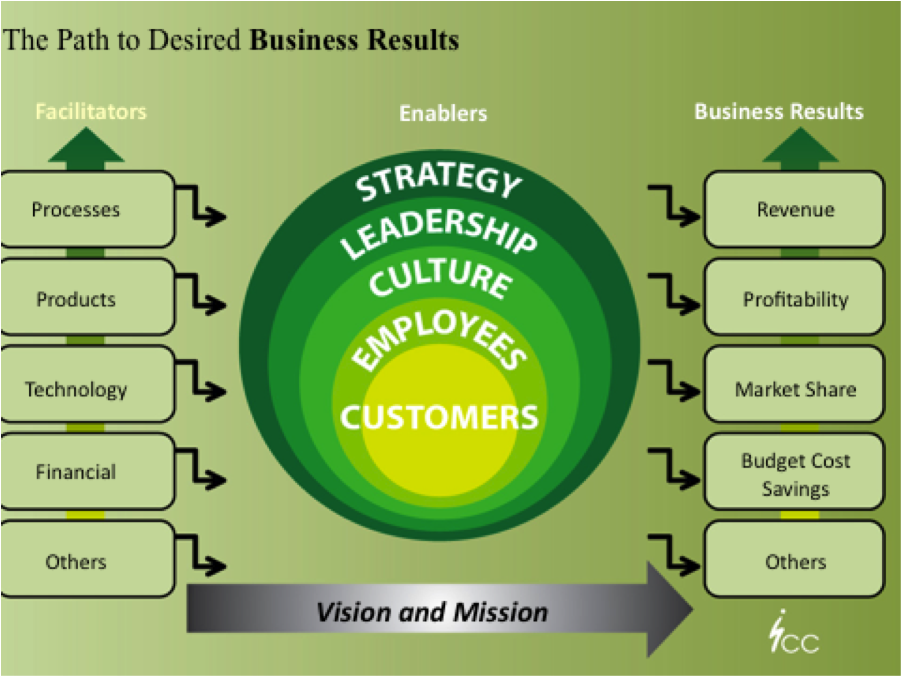
As you probably know by now, I’m fascinated by data and passionate about analytics and how both will transform our businesses. However, it’s a journey not a sprint and begins with assessing what we call "the path to desired business results":


There are five key drivers of performance in any organization and while analytics might be the means to an end, these enablers are the catalysts. So, standing where you are now, it’s worthwhile asking the following questions:

Strategy: How will analytics help us compete successfully? Will we be able to differentiate ourselves in our markets using analytics?

Leadership: Are we as leaders prepared to commit the organization to an analytics based way of making decisions? Can we give the employees who will have to make this work the buy-in they need to be successful? Can we put aside our impatience and allow them to Think Big but Start Small?

Culture: Do we have data fiefdoms that refuse to share data or collaborate on projects? Do we celebrate the efforts of the early adopters, even if success isn’t guaranteed every time, in the spirit of discovery and experimentation? Analytics is all about experiments, testing, and doing it over and over. Have we made more of our decisions by the seat of the pants and been proud of it?

Employees: Do we want analytics to cascade down into the organization and, if so, are we prepared to properly train those whose jobs it will be to manage the technology that supports their business knowledge? Are we hiring employees for competencies that underpin the need for a broadly based analytics movement?

Customers: This is one area of most businesses that has received the most analytics attention so the questions here are: is our customer data in one place, is it at the lowest level of analysis possible and have we aggregated it across all of our channels?

The analytics journey is probably never ending as technology and competencies improve exponentially to deliver more insight with less complexity. But, knowing where you stand before you take the first step – or flying leap – will ensure that this critical initiative doesn’t crash and burn at the first turn in the road.

What is your analytics journey like? Are you looking first at where you stand or sprinting off for the unknown?

Tuesday, February 15, 2011

Transform Your Metrics From "So What?" Into "Who Knew?"


There are a lot of 3D movies out; have you noticed? I don’t seek them out but I appreciate the fact that people may enjoy a film more when it is multi- dimensional and they can feel immersed in the action.

I think we get too fond of our metrics; we have them because we’ve always had them. We track metrics and manage them and present their variances against performance goals. The problem? They often are one-dimensional and not very meaningful outside of our own function. And, if they aren’t tied to a real business outcome, it’s hard to make a case for the programs we want to implement. We may not monetize metrics, which is the language of our bosses; so there’s a sense of “so what?” when we present.

So, how do you make a common metric like turnover (employee or customer) more 3 dimensional and get people immersed in your action?

Embed Metrics With Data: Not just the obvious data of people in/people out. Drill down; explore data. There’s an “aha” in there I promise and since you have the business context, there is no one better positioned to see it and explain it.

Use Data Sets from Other Departments: Make your metric multi-dimensional by bringing in data from HR, Sales, Marketing, Operations, Process, Call Center: whatever data set you have, add to it in a smart way by collaborating with other departments who also have valuable data that isn’t yet insight. We have to dismantle data fiefdoms and share. Where does turnover impact the business? How does it impact the business?

Try Simple Statistical Tests: This is the point at which people click off because they think it’s not in their skill set. If you have Excel on your PC, you have a statistical toolkit. Invest in a great little e-book that provides a huge amount of good information and it is well presented (Using Excel to Solve Business Problems by Curtis Seare). Try out various assumptions to see which are more powerful. Who is leaving? What is driving turnover? How does it affect customers? How does it impact employees? Where does it affect business goals? Experiment with results and keep testing.

Provide a Business Context: Sometimes people get hung up with statistics, even simple ones and forget that the most important point is taking what statistics can tell you and mapping that to what you know about the business.

Tell Me Something I Don’t Know: aka Monetize the Results. When you know what turnover really costs the company and what it costs to improve the situation, you will have the attention of people who haven’t seen your metrics/data/ideas presented in a way that they understand.

Then, your metrics are multi-dimensional and provide real intelligence for the organization.

How are you helping your decision-makers get immersed in your metrics? Are they in 3D?

Thursday, February 10, 2011

What Kind of a Boss Are You Anyway?


The title of today’s post came from a reader who sent me an email after my blog about employee commitment. There’s a lot of pent up frustration out there about us mangers, People, and it’s bound, as my reader suggested, to chase away your best and brightest.

As someone who likes to research a topic in order to develop it properly, I’ve done my due diligence and here is how some of the issues stack up. Do you recognize even one that applies to you? If so, there are things you can change IF you have the heart and mind to do it.

Don’t Believe All the Stuff You Read in Reviews: only Paris Hilton does that. Put your own boss’s comments in context. Is she bad about having productive performance conversations and the annual review (if you even get one) is rushed and bland? Maybe you should ask your team how you’re doing and really listen for feedback.

Are Your Bad Habits Rubbing Off on Your Staff? Are you continuously late to team meetings or do you regularly ask employees to work extra hours because you couldn’t get your act together? As Stephen Covey said, being in the thick of thin things means that the important things never get done – until they reach a crisis. Putting out fires is not the measure of a good manager or leader no matter how good that adrenaline rush feels.

Do You Show Genuine Respect for Other People? I confess: I absolutely hate people responding to email and texting during meals and meetings or continuing to work while I sit there for a scheduled meeting; and the only functioning brain in the room is mine because the other person erroneously believes in the myth of multitasking. It’s been proven that multitasking is less productive than attending to one thing at a time and following through on it. If you don’t respect my time or the purpose of the meeting, don’t call one -- or me.

You Went on the Leadership Courses; Now What? I’m not one of those people who believe that leaders are born not made although the potential needs to be there. Winston Churchill was a terrible peacetime leader but he understood what it took to lead in the darkest of times. I don’t think he went on a course to develop that skill set. The point is, leadership training can be generic and disconnected from either your job or your organization’s culture; making it very difficult to apply the content in everyday work. The best recipe is training that is a direct result of a good performance review (not filling up a predetermined number of annual training hours) coupled with mentoring and coaching. Being curious and unafraid to ask questions are also vital development tools.

As managers, too often we don’t take stock of our own performance and how it affects the people who have to make things work on the team. Are we lazy or in over our heads? Are we modeling the behaviors inflicted on us by our own bosses? When you find one day that your best people are leaving, you may need to own up to the fact that people rarely leave their jobs; they leave their bosses.

We’ve all had great bosses. Who were yours and what made them great?

Wednesday, January 19, 2011

Interest or Commitment: Knowing the Difference Could Change the Way You Manage


One of my clients recently sent me this quote from Peter Drucker that has had me reflecting on its true message and how it is applied, especially in business:

“There is a difference between interest and commitment. When you are interested in doing something, you do it only when circumstances permit. When you’re committed to something, you accept no excuses, only results.”

For me, being interested implies a passive mindset whereas commitment seems active, which is confirmed by dictionary definitions: “the trait of sincere and steadfast fixity of purpose”. While interest is associated with curiosity about someone or something, commitment is the “act of binding yourself (intellectually or emotionally) to a course of action.” Interest is more cerebral perhaps while commitment is both cerebral and visceral. Isn’t commitment what we want and need in our organizations to be successful? When leaders talk about connecting to the ‘heart and the mind’ aren’t they referring to commitment?

I have a few thoughts on how to listen for and instill commitment day-to-day in our businesses:

Strategy: is business strategy a story that inspires people to bind themselves to the direction in which you want to go?

Leadership: before employees are committed, leaders have to demonstrate their steadfast fixity of purpose. It’s a trait not a slogan (“We are committed to our employees.” “We are committed to our customers.”)

Culture: is the business environment a community that binds people together to achieve a common purpose or a federation of possibly interesting activities?

Employees: is the hiring process geared more toward uncovering interests than discovering commitment?

Customers: do we expect commitment from our customers while only being interested in what they can do for us?

The late Peter Drucker’s ideas and writing continue to provide enduring lessons of what motivates people and moves organizations toward a higher level of performance. As I said to my client as we exchanged emails, Drucker was a no nonsense thinker who understood the duality of our 'heart and mind' selves.

Does anyone have a favorite Drucker thought?


Tuesday, January 11, 2011

"If You Can't Explain in Plain English What You're Doing, You're Probably Doing Something Wrong"


Many of us are guilty of it. Using multisyllabic words, acronyms and jargon to explain our ideas. The quote in the title is from the late Alfred Kahn, an economist who loved words as much as numbers. To the listener or reader this type of doublespeak comes off as smug and annoying. Is this code for “we are in a club that knows what you don’t”?

For those who are trying to convey important ideas and thoughts, it’s downright counterproductive. If your audience doesn’t understand your meaning, what’s the likelihood that you will get what you want from the exchange?

I know, sometimes we just forget who is in on our jargon and acronyms; but that’s not an excuse. Do we really need to rename books “reading containers” as the VP of Amazon Kindle did recently? Is it more clever to describe a strategy to grow rapidly as being “in a delivery window for new growth”, which is what Royal Dutch Shell has done? Is being opaque a tactic to confuse the competition or the analysts? Heaven only knows what employees and shareholders make of this type of statement. More importantly who can engage with it?

Alfred Kahn probably had the best advice on the topic: “If you can’t describe what your model says in plain English without provoking derisive laughter, it probably doesn’t say anything of value.” Perhaps it sounds somewhat harsh but most of us who write and speak for a living probably could use a wake-up call from time-to-time.

So, the next time you have to present to or communicate with those not in your Acronymic Jargon Club, think about the objective of the exercise before you unleash HIPPA, CRM, BI, up-skilling, Title VI, VOC and the thousands of other “welcome-to-my-exclusive-world” concepts on an unsuspecting audience.

For a cringe-worthy read of other verbal and written disasters, I offer Lucy Kellaway’s article, My Awards for Management Guff on FT.com. It just makes me wonder how we got this way and whether there is any therapy for it.

Wednesday, January 5, 2011

To Prune or Not to Prune? It's Not Only For Gardens


I’m a wanna-be gardener; so I listen avidly almost every Saturday to a popular local radio talk show about gardening. Last week, a caller offered three reasons for pruning and he suggested that these reasons apply to every day living, too.

So, we prune in a garden:

To protect health
To encourage a different direction
To promote growth

I used to be afraid of pruning; scared I’d forever damage the shape and dimensions of trees that were planted long before I arrived. I’ve learned, though, to step back and look at my subject from its totality and to see limbs that didn’t survive a winter storm or that were growing against others and would eventually cause disease. With fewer boughs and branches, more light reaches the interior and making the cut at the right place encourages growth in the right direction. The future shape of the tree is determined by my own eye, hand and perspective.

Not to belabor this metaphor too long, but the gardener had the right idea, about trees -- and people and businesses, too. Here are my thoughts on the business side:

To Protect Health:
  • Have the right tools to do the job and get advice and input when you need it.
  • Use your wisdom developed through experience and maintain the courage of your convictions. Then, make an informed decision.
  • Look at the shape of your organization: is it hindering the way things need to be done today?

To Encourage a Different Direction:
  • Take a step back and view the totality of your business or operation. Don’t wait until there is a crisis or an economic meltdown to act. You get no points for that.
  • Set a course with your strategy, have a back-up plan and review often. Things happen too fast to set anything in stone.

To Promote Growth:
  • Shine a light on your internal processes, management practices, customer relationships and organizational culture. What is holding you back?
  • To know where you’re going, you need to know where you’ve been and where you are. It’s going to take a lot of good data to provide insight that leads to great business decisions. This is the time to bring Business Intelligence from the IT department to the entire operation.

What kind of business gardener are you? Are you promoting health; steering a new direction and encouraging growth? It's a great time of year to start pruning.